So you’ve started looking into machine learning, right? The models, the data, the endless tutorials. It’s kind of overwhelming. And just when you start figuring things out, another question comes up:
Should you learn Python or R?
It’s like being told to pick a favorite parent. Both have their fans, both can get the job done. But depending on what you’re trying to do — one might make more sense than the other.
Let’s keep it simple and talk like normal people. No tech-speak overload. Just the real stuff.
🧭 Why This Even Matters
Look, this isn’t about trends. It’s not like “Python is hot right now, so jump in.” It’s about how your brain works, what kind of projects you want to build, and how much hair you’re willing to pull out when stuff breaks.
Both languages are solid. But they’re built differently. Python is like that all-rounder friend who can do a bit of everything. R is the one who’s brilliant at math but might not show up to the party unless it’s a stats conference.
🐍 Python: Easy to Learn, Hard to Hate
Python didn’t start off in the machine learning world. It kind of… wandered in and ended up stealing the show. Why? Because it’s simple, flexible, and full of tools that just work.
What’s Good About It
- It’s readable.
Python code reads like English. Seriously. If you’ve never coded before, it doesn’t feel like learning a new language — more like learning how to talk to a super patient robot.
- Tons of ML libraries.
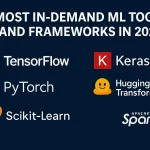
There’s scikit-learn for basic ML, TensorFlow and PyTorch for deep learning stuff, and things like pandas and NumPy to make data wrangling less painful.
- Not just for ML.
Want to build an app? Automate something? Scrape websites? Python does all that too. So you’re not stuck in a data-only box.
- Huge community.
You’ll never feel alone. Whatever problem you hit, someone’s already asked it on Stack Overflow… five years ago… and someone else answered it.
What’s Not So Great
Speed isn’t amazing.
Python is slower than some other languages. But unless you’re building real-time systems or working with HUGE datasets, you probably won’t notice.
Not deep into stats.
It can handle basic stats, sure. But if you’re going full academic or into complex testing, it might feel a bit shallow compared to R.
📊 R: Built for Stats, Made for Data Nerds
R is kind of like the OG of data science. It was literally made by and for statisticians. So if you’re into serious data analysis, it might feel like home.
Why R Stands Out
- Stats is its native language.
Regression, hypothesis testing, Bayesian models — this is R’s comfort zone.
- Graphs that slap.
Ever seen a plot so clean it looks like it belongs in a science journal? That’s ggplot2, and it’s only in R.
- Packages are on point.
R has caret, randomForest, tidymodels, and more — great for traditional ML tasks.
- Loved in research.
If you’re in academia, healthcare, social sciences, or finance, R is still a top pick.
But Here’s the Catch
Tougher to learn.
R doesn’t always make sense at first. The syntax is weird. You might stare at your screen for 10 minutes wondering why a simple plot isn’t showing up.
Not very flexible.
It does data science really well. But if you want to build web apps or tools outside that world, R isn’t the best choice.
🥊 Python vs R: Quick Face-Off
| Area | Python | R |
|---|---|---|
| Learning Curve | Beginner-friendly | Steep if you’re not into stats |
| ML Tools | TensorFlow, scikit-learn, PyTorch | caret, tidymodels, randomForest |
| Visualization | Matplotlib, seaborn, Plotly | ggplot2 (so good) |
| Stats Support | Decent | Amazing |
| Flexibility | Use it for everything | Mostly just data work |
| Deployment | Easy to put into real apps | Not really built for it |
| Community | Huge | Strong in research space |
So, What Should You Actually Pick?
Let’s keep it real. The “right” language depends on you.
Go with Python if:
- You’re new to coding and want an easy start
- You care about building stuff outside of ML too
- You want to deploy models into real-world apps
- You’re joining a company or team that’s already using Python
Go with R if:
- You love stats or come from a math-heavy background
- Your work is more research-focused or academic
- You need high-quality visuals and reports
- You’re doing finance, healthcare, or academic analysis
Do You Need to Learn Both?
Eventually? Probably.
But start with one. Don’t overdo it. Learn Python or R based on what you’re working on right now. Later, once you’re comfy, pick up the other. Being able to do both will make you super valuable in the job market.
Someone who can build a model in Python and do deep statistical analysis in R? That’s someone most teams would love to have.
💬 Final Thoughts
Look, there’s no perfect answer here. Both Python and R are solid for machine learning. They just fit into different parts of the puzzle.
If you’re into clean code, want to build real-world apps, and like flexibility — go with Python.
If you’re deep into stats, need high-quality charts, or working in research — R might be the better choice.
And hey, if you’re still not sure, just start with one and see how it feels. Worst case? You switch later and gain a second skill. That’s not failure — that’s leveling up.
Check Our Courses : Machine Learning Course , Deep Learning Course , Machine Learning Training With Python , AI-Deep Learning using TensorFlow , AI Full Stack Online Course .