A raw look at the gap between AI hype and what’s actually going on
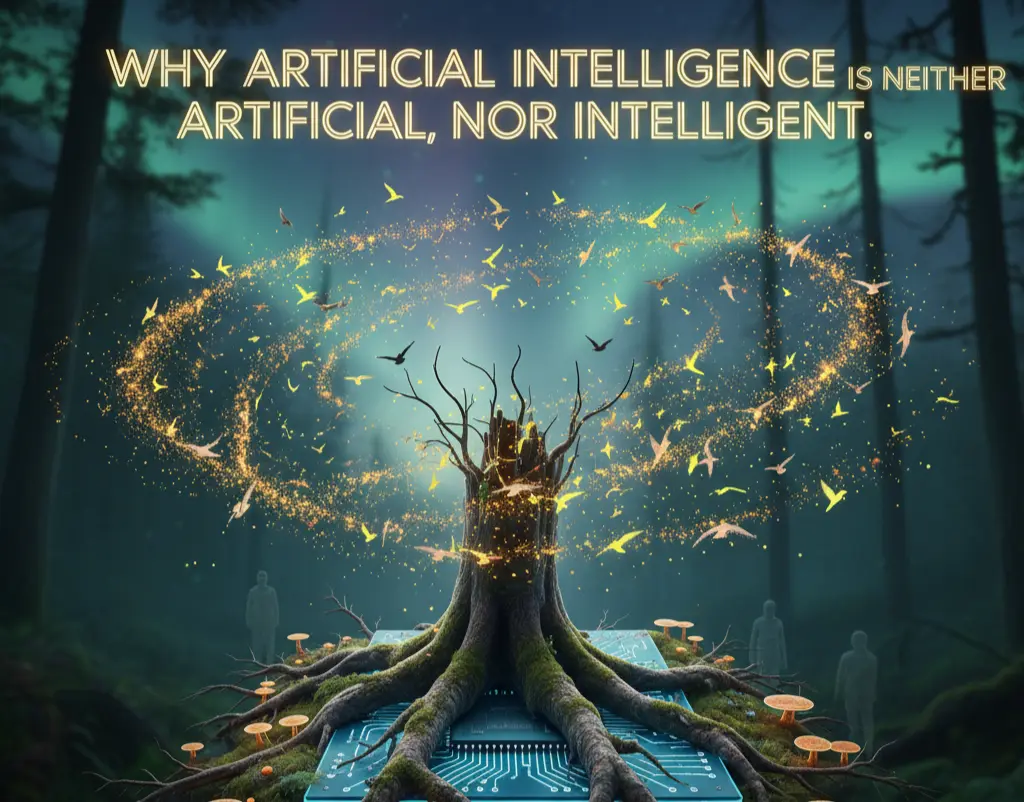
Introduction: Let’s Get Real About “Artificial Intelligence”
Every time you open your phone, there’s another “AI breakthrough” making headlines—self-driving cars, ChatGPT, AI doctors, whatever’s trending this week. But if we cut through the noise, there’s something weird about the term itself. “Artificial intelligence” sounds like we built some independent, thinking digital brain. But in reality, it’s neither artificial nor intelligent in the way people think.
And this confusion isn’t just about wording. It actually screws up how people use AI in business, research, and policy. The hype makes people assume AI can reason, decide, or even “understand” things the way we do. That kind of thinking leads to bad decisions—companies dumping millions into “smart” tools that are basically fancy calculators.
You might’ve seen stats like “80% of professionals believe AI will transform their work.” Sure, maybe. But most of them have no clue how it actually works. Let’s break this whole illusion down.
AI Isn’t Really “Artificial”
When we call something artificial, we usually mean it’s not part of nature—something man-made, detached, like a robot living its own life. But here’s the thing: AI doesn’t exist without humans. Every piece of it—from the code to the data—is soaked in human input.
AI is like a reflection of us, not some alien intelligence. It works because humans feed it information, tell it what to look for, and decide what’s “right.” That’s why bias creeps in so easily. If the data you feed an AI has biased hiring practices or bad historical records, the system will just repeat that bias—at scale.
Think of AI as a mirror that never blinks. Whatever’s in front of it—good or bad—it will reflect back with perfect precision. And that’s the scary part. When people call AI “independent,” they forget that it’s completely dependent on us for:
- What data it learns from
- How it’s designed
- What rules it follows
- How its output is used
- And who takes the blame when it messes up
So yeah, “artificial intelligence” is a bit of a stretch. “Human-trained pattern machine” would be a better fit, though it doesn’t sound as cool on a product launch slide.
AI Isn’t Really “Intelligent” Either
Now here’s the second part of the illusion. Everyone keeps saying AI is “smart.” But that depends on what you mean by smart. Because AI isn’t thinking—it’s just matching patterns.
When you talk to ChatGPT or use an image recognition model, what’s really happening is math. The system is scanning through patterns it’s seen before and guessing what fits next. It doesn’t “understand” the topic. It doesn’t “see” your cat. It just notices pixel arrangements that look like the ones labeled “cat” during training.
There’s an old idea called Moravec’s Paradox. It basically says: things that are easy for humans (like recognizing faces or picking up sarcasm) are hard for computers, and things that are hard for humans (like doing calculus or chess) are easy for computers. That’s because human intelligence evolved for survival—seeing, feeling, understanding context—not solving equations.
AI doesn’t have that kind of intelligence. It doesn’t know what the world is. It can’t tell cause from coincidence. It can’t make moral judgments. It can’t come up with something completely new; it just remixes what already exists. You can train it on every novel ever written, but it still won’t “understand” what heartbreak feels like.
So yeah, calling that “intelligence” is kind of generous.
The Real-World Problem: Mistaking AI for Judgment
Here’s where it starts to hurt. Companies and leaders are handing over real decisions to systems that can’t actually think. They’re mistaking prediction for understanding—and it’s costing them.
Imagine an AI in charge of financial predictions. It’s trained on old data, but the world changes—pandemics, wars, new markets. The AI doesn’t “notice” those shifts. It just keeps repeating what used to work. The result? Expensive, bad decisions.
Same goes for hiring, policing, healthcare—you name it. When AI makes biased or wrong calls, everyone blames the system, but the system is just a mirror. The real issue is the people trusting it too much.
There’s also what I’d call “mental rust.” The more teams rely on AI to make decisions, the less they practice judgment themselves. It’s like using GPS for every trip—you forget how to navigate without it. Over time, organizations lose their critical thinking muscle.
And when AI makes mistakes, it doesn’t just make a mistake—it makes the same mistake a million times faster. That’s why unchecked automation can turn small errors into massive disasters.
What AI Is Actually Good At
Let’s not throw it all out the window though. AI is awesome—when used right.
It’s unbeatable at spotting patterns. For example, banks use it to detect fraud way faster than humans could. It’s great for recognizing images, voices, and repetitive data tasks. It can generate first drafts, filter noise, and give humans a head start.
But once you need real understanding—moral choices, nuance, context—AI falls apart. It can’t tell if a sentence is sarcastic or if a hiring choice feels wrong. It can’t deal with totally new situations. And it definitely can’t reason its way out of complex ethical problems.
So, the best use of AI isn’t replacement—it’s augmentation. Humans plus AI, not humans versus AI. The winners in this tech race will be the ones who get that balance right.
Building Smarter AI Use (Without the Hype)
So how do we keep the good and ditch the nonsense?
First, we need real AI literacy. People in charge—CEOs, engineers, policymakers—need to understand what AI really does, not what the buzzwords promise. That means no more blind faith in “intelligent” systems.
Leaders should set clear goals: What’s the AI for? What are its limits? Who double-checks its output? If a decision goes wrong, who owns it?
Technical teams need to be transparent. Show what the model can’t do. Test it regularly for bias. Keep a human in the loop, always. Because when something inevitably breaks, you’ll want someone who can ask, “Does this even make sense?”
And organizations need accountability. There has to be a process for reviewing AI’s decisions and reversing them when necessary. Otherwise, you end up with a black box running your business.
The Honest Truth: AI’s Limits Aren’t Going Away
Here’s the thing—it doesn’t matter how much bigger the models get or how many GPUs you throw at them. The fundamental limitation remains. AI doesn’t think. It predicts. And prediction isn’t understanding.
If we stop pretending it’s something more than that, we can actually start using it for what it is: a tool. A really powerful one, yes—but still a tool. The magic happens when humans use AI with judgment, not instead of it.
Conclusion: Stop Calling It What It’s Not
The hype around artificial intelligence makes it sound like we’ve built digital gods. In reality, we’ve built powerful mirrors—machines that reflect our data, our biases, and our thinking. They’re not artificial, because they come from us. They’re not intelligent, because they don’t actually understand.
And that’s okay. We don’t need them to be. We just need to stop lying to ourselves about what they are. The smartest organizations of the next decade won’t be the ones that scream “AI-first.” They’ll be the ones that say, “We use AI, but we still think for ourselves.”
Because in the end, the future isn’t about smarter machines. It’s about smarter humans using machines the right way.
Check Our Courses : Data Science Classroom Training, Python Classroom Training, Machine Learning Course , Deep Learning Course , AI-Deep Learning using TensorFlow , AI Full Stack Online Course , Cyber Security Course in Bangalore , Core Ai Training , Digital Marketing Training , Power BI Training in Bangalore , React Js Training , Devops Training in Bengalore , Microsoft sql Training .